Damascus Galleries Today: Where to See Syrian Art
6 September 2026
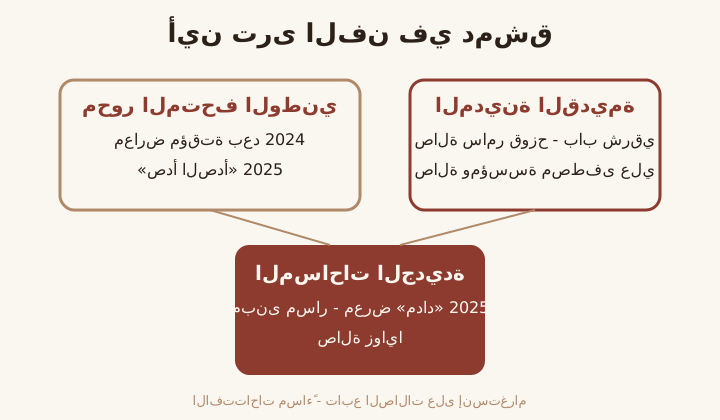
In April 2025, Damascenes walked into the Massar building near Umayyad Square for the first time in years. The huge structure, designed in the shape of a Damascene rose and left as an abandoned shell throughout the war years, suddenly filled with the work of 29 young artists in the Madad exhibition - the first major show after the fall of the regime in December 2024. The queues at the door said something plain: the city is starved for its art.
Anyone who wants to see Syrian art today in its mother city needs a small map, because the scene is spread across private galleries that held out through the war, official institutions catching their breath, and new spaces being born right now.
Old Damascus: the galleries that never left
The commercial heart of the Damascus art scene stayed inside the walls. Samer Kozah Gallery, near Bab Sharqi, is one of the oldest private galleries operating in the city; it kept exhibiting through the hardest years and shows established and young names alike. A few minutes' walk away, in the lanes of the Old City, sits the Mustafa Ali Gallery and Foundation, founded by the leading Syrian sculptor of his generation in an old Damascene house - the place itself is an architectural gem, and sculpture in the courtyard meets Damascene architecture in a way no neutral white cube can offer.
These galleries are not museums. The works are for sale, and prices inside Syria are still far below what the same artists bring at Gulf and London auctions - which makes Damascus the cheapest entry point for anyone considering collecting. Read how the Syrian art scene looks after 2024 first for the wider context.
Modern galleries and new spaces
Outside the walls, Zawaya Gallery and others like it have returned to active programming since 2024: solo and group exhibitions, workshops, and educational programs trying to repair what was severed - an entire generation of art students graduated during the war without ever seeing a single international exhibition.
The paradox is that the liveliest venues today are not galleries in the traditional sense. The Massar building, after Madad, became a standing candidate for hosting major events, and the National Museum of Damascus has reclaimed its role as a platform: in May 2025 it hosted the exhibition Creative Memory of the Syrian Revolution, on detainees and the disappeared, and in November the exhibition Rust of Rust - 37 works sculpted from shell casings and war debris. Works like these could not have been shown in the same place two years earlier.
How to plan your visit
Rule one: do not rely on websites - most Damascus galleries announce their programs only on Instagram and Facebook. Rule two: openings are in the evening, usually between six and eight, and they are open to all - you will find the artist standing beside the work, ready to talk.
One day is enough for a focused route: start at the National Museum around midday, head down to the Old City in the late afternoon for Kozah and Mustafa Ali, and finish with an opening if you catch one. For comparison with what is happening outside Syria, the diaspora scene has its own map in Istanbul and Berlin, and the galleries that internationalized this art in the first place - such as Ayyam Gallery and the Atassi Foundation - run the scene from Dubai.
What actually changed after 2024?
Three things any visitor can feel. Self-censorship has receded: works about the prisons and the mass graves are shown openly. Emigre names have begun exhibiting in Damascus again, if only through shipped works, pending the return of their makers. And the audience has changed - openings are no longer the preserve of a small, closed cultural circle but a social event for a city discovering it has something to say. The market's infrastructure - documentation, shipping, insurance - remains primitive, and that is exactly what makes this moment interesting for the early collector.
The trajectory of the scene since the fall of the regime is the subject of our detailed article on Syrian art after 2024, and the rest of the site's guides are in the articles index.
FAQ
Are Damascus galleries open to ordinary visitors, or only to collectors?
Open to everyone, and mostly free. Galleries such as Samer Kozah Gallery and the Mustafa Ali Gallery in Old Damascus receive visitors almost daily, and nobody asks whether you intend to buy. Ask about opening nights - they are the best time to meet the artists themselves.
Where do I follow news of new exhibitions in Damascus?
The most active channel is the galleries' Instagram and Facebook accounts - most announce there before anywhere else. The National Museum of Damascus announces its temporary exhibitions through the Ministry of Culture, and the culture pages of Syrian news sites cover the major openings.
Can I buy an artwork from these galleries?
Yes, and this is the cheapest entry point for collecting Syrian art anywhere in the world. Prices inside Syria remain far below what the same artists fetch in Dubai or London, but watch two things: ask for a signed certificate of authenticity, and if you live abroad, ask about restrictions on taking artworks out of the country before you buy.